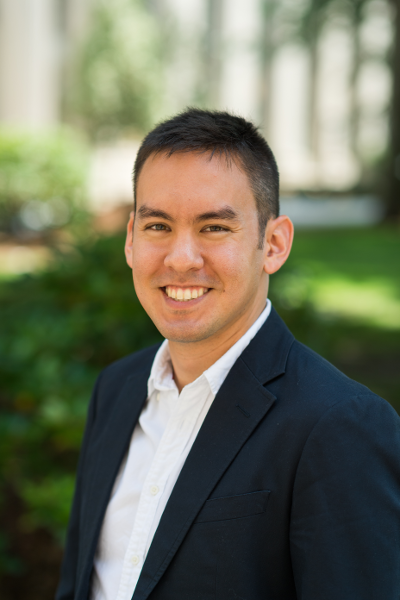
 I am a Research Scholar at IIASA in the Energy, Climate, and Environment program.
My research focuses on transportation demand growth in economies worldwide; consequent energy demand and environmental impacts; and technology and policy options for sustainable mobility.
I am a Research Scholar at IIASA in the Energy, Climate, and Environment program.
My research focuses on transportation demand growth in economies worldwide; consequent energy demand and environmental impacts; and technology and policy options for sustainable mobility.
I am interested in data, methods, and models that can be used to understand emerging technologies, new policies, and uncertain trends in transport. These assessments inform decisions in pursuit of climate, environmental, and economic goals. In particular, I believe that the trajectories of China, India, and other emerging/transition economies will be decisive and informative as we seek to make transport compatible with global sustainability. I also see O/FAIR practices as essential to the equity of systemic change in transport systems, because they reduce barriers and allow stakeholders to have direct ownership of processes of measurement, modeling, and assessment. To these ends, I am or have been:
- a co-organizer of the iTEM consortium,
- a participant in the Transport Data Commons Initiative (TDCI),
- a Contributing Author to Chapter 10: Transport in the WGIII portion of IPCC AR6.
- active in developing and promoting open source research software for data handling and modeling.
Contact. Find me on Mastodon (@PaulNatsuo@scholar.social), Github, Google Scholar, Goodreads; regrettably on LinkedIn and Twitter; and inactive on Keybase and Disqus.
E-mail me at mail@paul.kishimoto.name;
my PGP fingerprint is EB2C 9E86 96D5 EB2C 9C66 428B 61A1 338E 4CE1 9468.
You can also contact me by e-mail if you'd like to connect on Signal.
Earlier. I earned my Ph.D. in Engineering Systems from the MIT Institute for Data, Systems and Society1 under the supervision of Valerie Karplus, Jinhua Zhao, and John Reilly, where I was a Martin Family Fellow in Sustainability (2017), a research assistant in the MIT Joint Program on the Science and Policy of Global Change, and a teaching assistant for 17.310 Science, Technology, & Public Policy (2017).
My doctoral research developed empirical and modeling methods for understanding China's passenger and freight transport systems, particuarly the rapid growth of private vehicle ownership; its impacts on energy demand, GHG emissions, and local air pollution; and related policy. This continued work done for my S.M. in Technology & Policy (TPP) on the interaction of climate policy and passenger travel activity.
Other interests. Since joining the Royal Canadian Air Cadets in middle school, the practice and development of leadership has been a strong personal interest. Able, technical leaders are a bulwark against both short-term political expediency—which so often undermines good governance—and the unintended but largely foreseeable consequences of technological change. I have worked and taught in engineering leadership education through the MIT TPP Leadership Seminar (2011–2014); the University of Toronto (U of T) Engineering Society, Iron Dragons, and Leaders of Tomorrow.2
I received my B.A.Sc. in Engineering Science (Aerospace) from U of T, previously worked on control of UAV swarms at the U of T Institute for Aerospace Studies and was a teaching assistant in Engineering Science Praxis design courses. At MIT, I served with the Climate CoLab, Transportation Club, Technology Policy Student Society, and Engineering Systems Society.
Between research, service commitments and reading, I don't often find time to get other opinions and ideas into writing. Some exceptions are here, along with resources and interesting items that have inspired me…and also a lot of old cruft! This is at least the tenth incarnation of my personal website over >18 years at half a dozen URLs; the only constants have been the mottos γνῶθι σεαυτόν and 勿体無い.
Welcome, and enjoy!
-
Formerly the Engineering Systems Division. ↩
-
Now the Institute for Leadership Education in Engineering (ILead). ↩